
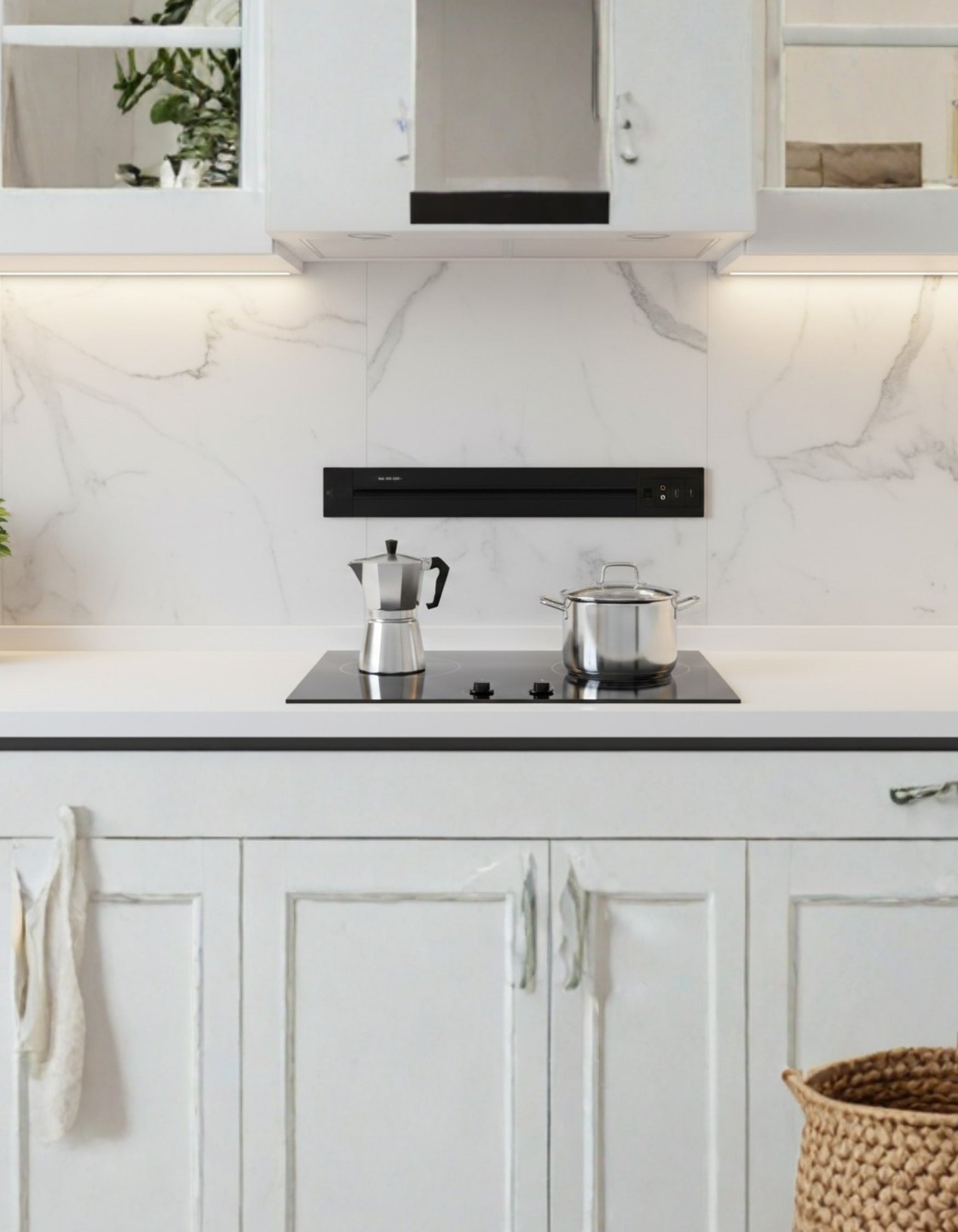
The modern Indian kitchen has evolved into a high-load electrical zone. With appliances like mixer grinders, microwaves, induction cooktops, air fryers, refrigerators, and water purifiers operating daily, traditional fixed sockets often become insufficient.
This is where power tracks offer a structured solution.
Unlike extension boards, a properly installed power track for kitchen use provides distributed load access, modular flexibility, and improved safety alignment with contemporary electrical needs.
Below are the top 7 practical benefits of installing power tracks in Indian homes.
1. Structured Load Distribution (32A Track Capacity)
A standard kitchen-grade power track typically operates on a 32A-rated rail, allowing stable current distribution across the track.
Individual socket modules are commonly:
-
5A sockets - suitable for phone chargers, laptops, small electronics
-
15A sockets - suitable for mixer grinders, juicers, microwaves (within rating), induction cooktops (as per wattage), and similar appliances up to 15A
This configuration ensures that each appliance connects through a rated socket rather than overloading a single extension board cable.
Important: Appliance wattage must always be verified before use. Installation should be done by a qualified electrician.
2. Reduced Risk of Overloading Compared to Extension Boards
Extension boards draw power from a single wall socket and distribute it through internal wiring. When multiple high-wattage appliances operate simultaneously, the risk of overheating increases, particularly in lower-quality boards.
Power tracks, being hardwired systems, provide:
-
Direct supply integration
-
Stable internal conductors
-
Reduced strain on wall sockets
This makes them more suitable for structured, long-term kitchen setups.
3. Better Suitability for Wet Kitchen Environments
Indian kitchens regularly deal with:
-
Steam
-
Oil splashes
-
Cleaning moisture
Extension boards often sit on countertops or hang near sinks, increasing exposure risk.
Power tracks are typically:
-
Wall-mounted
-
Installed under cabinets
-
Elevated from spill zones
-
Built with enclosed internal wiring systems
While not waterproof devices, their installation position significantly improves operational safety.
4. Modular Flexibility with Movable Socket Modules
One of theitsthe defining features of modular power tracks is flexibility.
They allow:
-
Movable socket modules
-
Adjustable spacing
-
Attach-and-detach configuration
-
Expansion without rewiring
This solves a common problem in kitchens where bulky appliance plugs block adjacent sockets.
Unlike fixed wall outlets or extension boards, power tracks allow layout adjustments over time.
5. Improved Cable Management and Aesthetic Integration
From an interior planning perspective, cable clutter reduces both safety and visual quality.
Extension boards introduce:
-
Visible wiring
-
Tangled cables
-
Countertop obstruction
Power tracks integrate linearly into modular kitchen designs, maintaining clean surfaces and architectural symmetry.
This makes them particularly suitable for contemporary Indian modular kitchens.
6. Elevated Installation for Improved Child Safety
In homes with children, socket accessibility matters.
Extension boards are often placed at low levels and can be pulled by cables.
Power tracks are installed at elevated heights and may include shutter-protected socket modules, reducing direct access risk.
Elevation alone provides an added layer of safety.
7. Long-Term Infrastructure Upgrade
Extension boards are temporary power expansion tools.
Power tracks are structured electrical infrastructure solutions.
In homes where kitchen appliances are permanent fixtures, installing power tracks ensures:
-
Better load planning
-
Reduced reliance on plug adapters
-
Cleaner installation
-
Future appliance compatibility
For renovation projects and new constructions, power tracks align better with modern electrical planning standards.
Where Adivaa Fits in the Power Track Category
Adivaa offers modular power track systems aligned with Indian home requirements, featuring:
-
32A rail systems
-
5A and 15A socket modules
-
Movable modular configuration
-
Fire-resistant casing
-
Shock-resistant housing
-
Modern kitchen-compatible finishes
When evaluating any power track system, verify:
-
Amp rating
-
Appliance compatibility
-
Installation quality
-
Electrical safety compliance
Specifications should drive the decision.
Frequently Asked Questions
Are power tracks safe for Indian kitchens?
Yes, when properly rated (32A rail with 5A/15A sockets) and professionally installed.
Can mixer grinders run on power tracks?
Yes, using 15A socket modules within the appliance’s rated current.
Are power tracks better than extension boards?
For permanent kitchen setups with multiple appliances, power tracks offer structured load distribution and improved cable management.
Can power tracks be installed in existing kitchens?
Yes, surface-mounted installations are possible without major structural changes.
Final Perspective
As Indian kitchens become more appliance-intensive, electrical planning must evolve.
Power tracks offer:
-
Structured load handling
-
Modular flexibility
-
Cleaner integration
-
Improved safety alignment
For homeowners planning long-term infrastructure rather than temporary fixes, power tracks represent a practical upgrade.
Share:
Power Track for Kitchen vs Extension Boards: Which One Is Safer & More Stylish?